Remote Care for Spinal Cord Stimulation: Todd Langevin on BIOTRONIK Neuro’s Data-Driven Approach
Spinal cord stimulation (SCS) has helped millions of patients manage chronic pain, but one challenge has remained difficult to solve: What happens after the implant. BIOTRONIK Neuro is addressing that gap through their Prospera™ SCS system, its remote monitoring focus, and a proactive care approach designed to give clinicians clearer visibility into device performance, therapy usage, and issues that may affect long-term patient outcomes.
In this conversation, Todd Langevin, President of BIOTRONIK Neuro, shares how his 35-year career in the field led him to BIOTRONIK, why the company chose SCS as its entry point, how Prospera differs to traditional SCS platforms, and why he believes remote monitoring will play a defining role in the future of neuromodulation.
 Interview by
Chay Carter,
founder of Carter Sciences.
Interview by
Chay Carter,
founder of Carter Sciences.
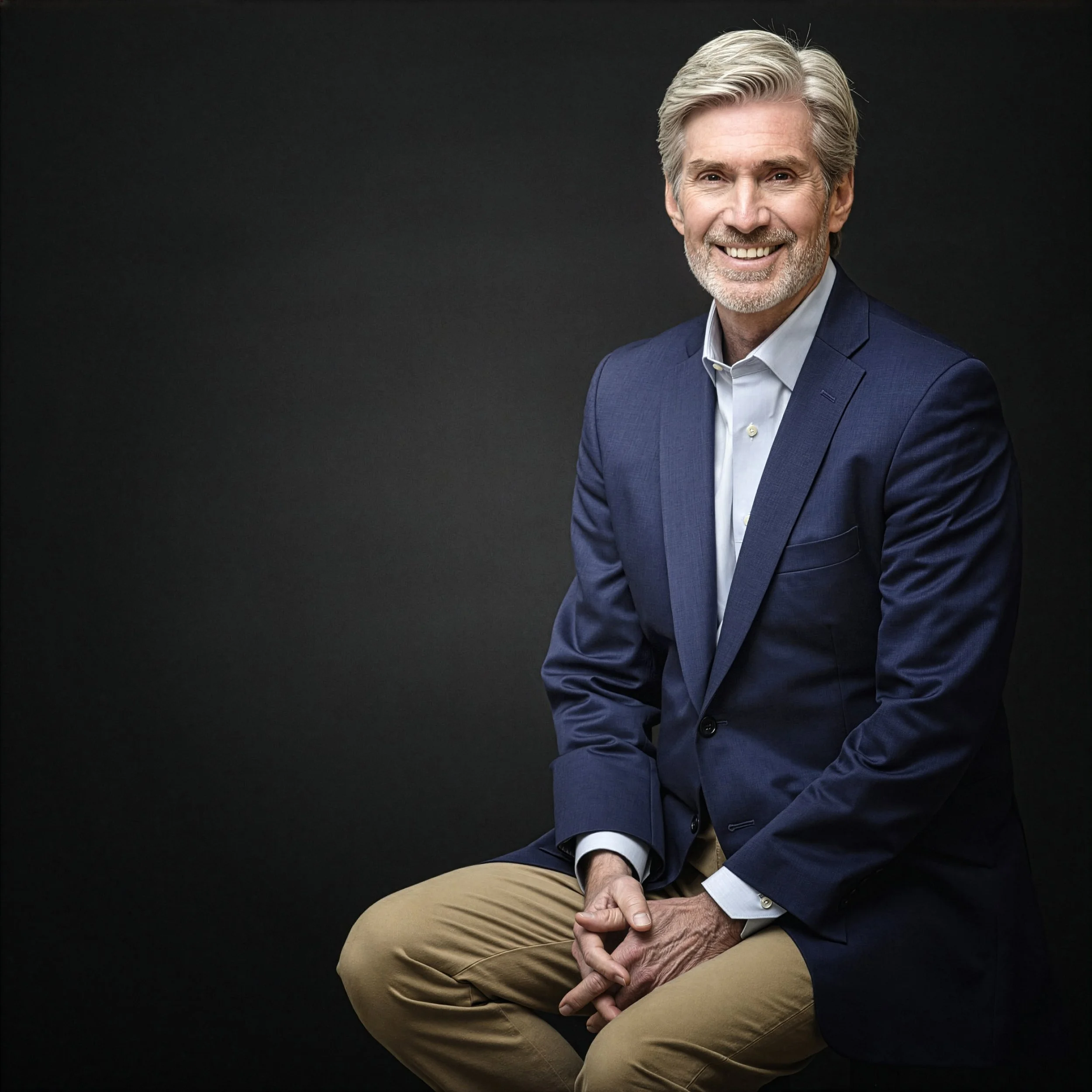
Todd Langevin is President of BIOTRONIK Neuro.
Tell me about your career — what brought you to neuromodulation and eventually BIOTRONIK?
I’ve been in neuromodulation and medical devices for 35 years. I started at Medtronic a long time ago, initially in the drug delivery business, which at the time was a venture, and eventually moved into Medtronic’s neuro business.
Over the 20 years I was there, I held a range of roles across pumps, spinal cord stimulation, deep brain stimulation (DBS), clinical trials, regulatory affairs, marketing, and general management. I also spent five years in Europe, which was a great training ground. I was exposed to different therapies and technologies, and I had profit-and-loss responsibility, so I learned how the business works: generating revenue, launching new products, and building markets. I launched several products, including DBS and spinal cord stimulators (SCS).
After Medtronic, I joined a couple of start-ups, one in cardiovascular (CRVx / Barostim) and one in DBS for Alzheimer’s disease (Functional Neuromodulation). Then I found my way to BIOTRONIK. Someone representing BIOTRONIK contacted me about leading their neuromodulation business, specifically in SCS.
My first question was: Does the world need another spinal cord stimulator? I knew the competition was fierce. But the more I learned about the company and the technology, the more I concluded that yes, the world does need one. That’s how I came to BIOTRONIK.
BIOTRONIK seems to have a genuinely unique proposition in the market, especially with the remote care element. What inspired the company to enter the neuromodulation space and develop Prospera?
BIOTRONIK is privately held, we’re not traded on Wall Street, so we can make long-term decisions. Our owner, Max Schaldach Jr.,took over from his father, and the company has a long history in medical devices. BIOTRONIK was founded in Germany, grew from pacemakers into a global business, and we compete worldwide in cardiac rhythm management.
If we’re honest about it, cardiac rhythm management is a form of neuromodulation. So the idea was that the technologies BIOTRONIK developed over decades could be applied to neuromodulation too.
The neuromodulation market was growing when this idea emerged, and it continues to grow. The company decided SCS made sense as the initial focus. It was already a large and underpenetrated market, with the US accounting for the majority of global demand, and there were still clear unmet needs — even in a competitive category. While we have aspirations beyond spinal cord stimulation, it was the right entry point.
“ In cardiac rhythm management, remote monitoring has been used for decades… Why not apply that to neuromodulation? ”
How is Prospera unique and what does ‘remote care management’ actually do in SCS?
That’s the fundamental question, because there’s a history of companies entering this field and shaking up the market with something meaningfully different. But if we came in with a slightly smaller device or a little more battery life, it wouldn’t be that compelling. The established players are very good at what they do.
Of course, we needed a ticket into the game; we needed a waveform. Ours is called Resonance, and it performs very well. But what we’re really bringing to the table is the ability to solve a major gap in spinal cord stimulation: What happens after the implant.
Up until now, nobody has really known what’s happening day-to-day with implanted SCS devices, except through retrospective analyses, surveys, and publications. In cardiac rhythm management, remote monitoring has been used for decades, and BIOTRONIK has a long history of collecting meaningful information from implanted devices. We asked: Why not apply that to neuromodulation?
So with Prospera, the implanted device is also a remote monitoring device that collects useful information about device performance and how patients interact with therapy on a daily basis. That gives a visibility the field hasn’t had before, and I believe it’s the future of SCS, and likely other neuromodulation therapies too.
In practical terms, how does it work? What kinds of datapoints is the device actually tracking?
The device is an implanted device — it treats pain, but it also has remote monitoring capability. The device has the capability to sense a number of events, including:
Whether the patient is recharging the device, and how often,
Whether the device is on or off,
Whether therapy is being used within the therapeutic ranges that have been set by the physician,
Whether there are impedance issues.
These triggers matter because if a patient isn’t recharging, or their device is off, there’s usually a reason. Sometimes the device is off and the patient doesn’t even know it. They’ll say, “My pain is back, I don’t know why.” Then they need a clinic appointment, which can take days. And then you find out the device was simply off — which can cause patients to lose confidence in therapy.
We have a dedicated team, BIOTRONIK Neuro’s Embrace One Care Team, that can respond to these triggers, contact the patient, or coordinate with the rep and clinician. Often, a simple call solves the problem. In some cases, we can even turn therapy back on remotely.
The system is passive. Signals from the implanted device go to the patient’s programmer via Bluetooth. Then, the programmer communicates to the cloud daily.
The data is also available to clinicians. We’re not trying to get in the way of the patient-clinician relationship — the goal is to provide real visibility so care teams can see how patients are actually using therapy.
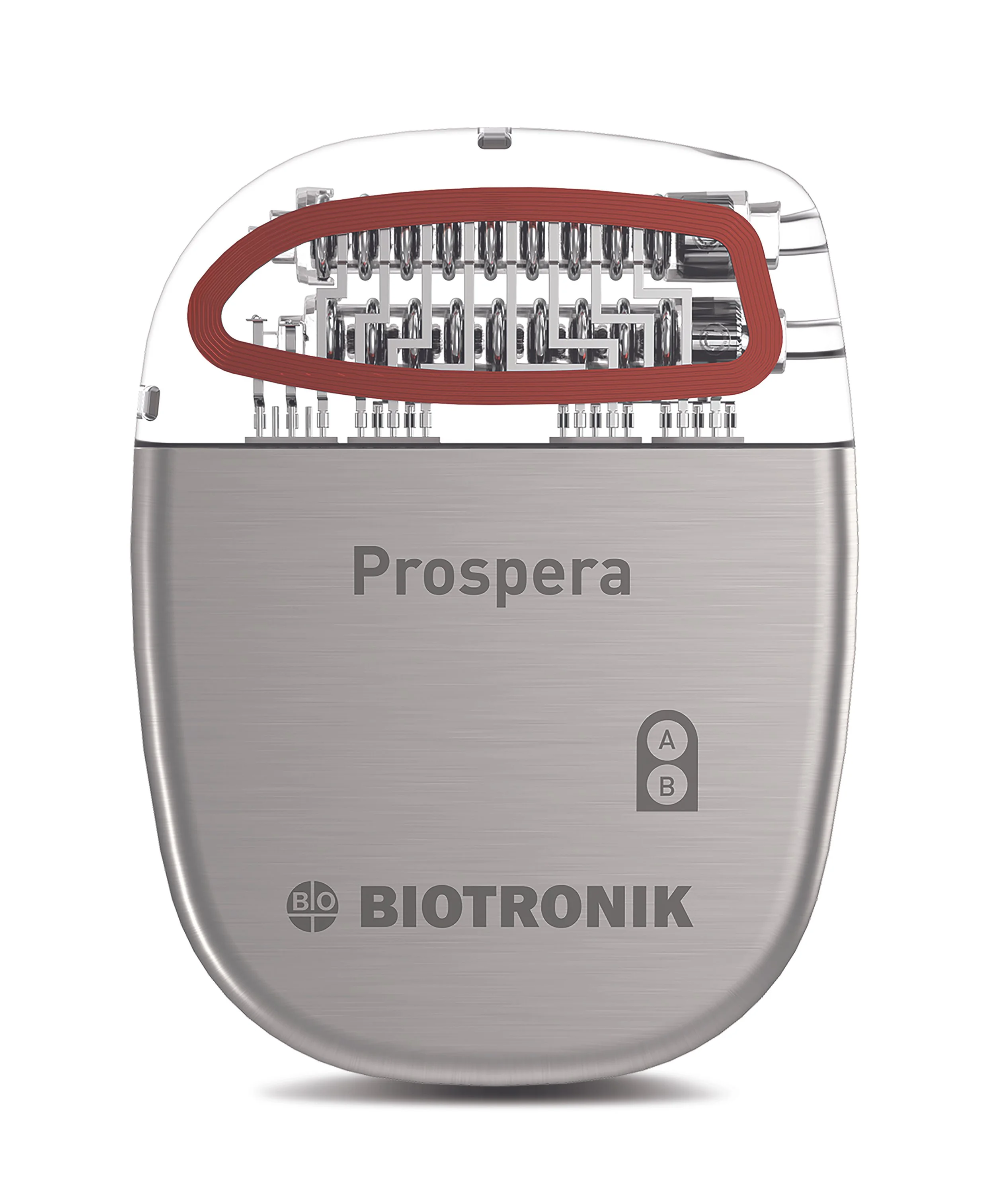
BIOTRONIK’s Prospera device acts as an SCS device as well as a remote monitoring tool.
How have patients responded to that? Do they see it as reassuring, or is there any concern about being monitored?
When we first launched this, I think one of the concerns from some of our advisors — people who are experts in the field and longtime users of these systems — was whether patients were going to feel that they were being watched. In this era of data privacy concerns and people feeling like someone is spying on them, that was a fair concern.
When patients get implanted, they do have to consent to having this data looked at and followed. Our opt-in rate is 99%+, which is remarkable. We didn’t expect it to be that high. What that means is that almost every single patient has said, “yes, I consent to having my data collected’.
And when we do surveys on this, patients actually like the fact that somebody is looking out for them once the device goes into their body, that they’re not just left to fend for themselves. They’re not neuromodulation experts, and they’re not supposed to be. So when challenges arise, and they inevitably do for many patients, they know that somebody is looking out for them and can help them navigate some of the questions and complexities of neuromodulation.
You’ve now published real-world data on your first 500 patients. What did that tell you, and why is it important?
In the spinal cord stimulation space, there is a lot of conversation about remote monitoring. But the fundamental question is: so what? Who cares that you collect all that data unless you can point to some outcome that’s improved, something that’s helpful for patient care, and something that’s useful for physicians themselves? That’s what we’re trying to do fundamentally. The CRM business has shown that you can improve mortality, reduce patient visits, and create all sorts of benefits from remote monitoring, and we want to extend that now into SCS.
Our first real-world data publication, in the Neuromodulation Journal, looked at the first 500 consecutively enrolled patients, from 1 through 500. We didn’t cherry-pick patients by indication. We didn’t filter by physician experience. It was real-world, prospective data.
One key finding was that 4.9% of patients, at a median implant duration of about one year had their devices explanted.
If you look at prior literature, you see very different outcomes, including a publication suggesting that at one-year follow-up, 11% of patients had their devices explanted. We believe remote care management helps clinicians intervene earlier and keep patients in therapy longer, potentially recreating the kind of touchpoints patients get in clinical trials, where engagement is typically higher.
“ Patients like that somebody is looking out for them once the device goes into their body — that they’re not just left to fend for themselves. ”
Historically, why has it been so difficult for the field to understand whether patients are actually staying on therapy long term?
Most of the historical literature is retrospective, going back to see how patients are doing years later, and it often includes dropouts or missing follow-up. You don’t always know what those gaps mean.
With our system, we have a prospective 500-patient dataset. These patients are all still implanted, and we know that, because the data is being collected prospectively. The historical reports I’m talking about are more like going back and see how the patients have been doing over the last five years. Some patients you can’t find. Some you can’t get hold of. There’s loss to follow-up. The quality of that data, while still valuable, is not the same as the kind of data we’re collecting going forward.
So the fact that we can do this prospectively is a major event. It’s real-world data, of course, and that’s another advantage. And just think about this: Without this remote monitoring set-up, if want to find out how Mrs Smith is doing, you’d have to call her up and ask. And if you can get hold of her, then you can log that information. But there are going to be a large number of patients that you simply can’t access.
One of our key opinion leaders made a great point — he asked a room of implanters to think of a patient, and then asked them to raise their hand if they could tell whether that patient’s device was on or off. Nobody could. But with a remote monitoring system, we can answer that instantly, and that changes everything.
You’ve spoken before about the concept of a ‘virtual explant’. What does that mean and why is it important?
We track actual explants — implanted device removals — too, and there can be valid reasons for those, but a virtual explant reflects patients losing confidence and turning therapy off long term.
In a study we ran, we defined a virtual explant as stimulation being off for more than 180 days. There were only four virtual explants, which was less than 1%. We also generally know why. In two cases, we couldn’t reach the patient, but we could see the device wasn’t being used. Of the patients we could reach, one patient developed dementia and couldn’t interact with the system. One patient had unresolved lead migration — the unintentional, post-operative displacement of an implanted electrode lead from its original target position.
“ As the technology, sensing and data management capabilities improve over time, the market for all kinds of neuromodulation can be very exciting. ”
How has the response been commercially so far? Is the data resonating with clinicians and the wider market?
We knew it would be difficult to take business from established players with strong technology and teams. But the field has a real problem: What happens after implantation, and long-term therapy persistence.
We presented our first 500-patient dataset at NANS, and the reception was strong. There’s increasing recognition, including from key leaders and platforms like ASPN, that remote care management is where the field is heading.
And the dataset compounds daily. We now have several thousand implanted patients. Over time, the ability to mine this data will become incredibly valuable. We may even be able to predict events that were previously unpredictable, especially as AI advances.
Stepping back a bit, what excites you most about where neuromodulation and neurotechnology are heading overall?
A lot excites me. Peripheral nerve neuromodulation is a great example. Urology and continence markets have seen major momentum, including acquisitions like Axonics. We’re paying close attention to those spaces.
Brain stimulation is still challenging, especially for psychiatric indications, but closed-loop capabilities may improve outcomes over time. Brain-computer interfaces are promising too, though I suspect they’ll take longer than many people expect to deliver.
I’m also excited by rehabilitation applications like Onward, using stimulation to restore function for people with paralysis.
So I think that as the technology gets better, the sensing capabilities get better, and the data management capabilities improve over time, the markets for all kinds of neuromodulation can be very exciting. I think it’s a good place to be if you’re a person getting into this business, or a researcher, or a clinician. I’m excited about it, and I think BIOTRONIK has those core capabilities to decide which area we want to go into next.
Also published on Medium via NeuroTechX
Carter Sciences delivers personalized talent strategies backed by 20 years of international headhunting experience. We support growth-stage startups with tailored solutions and cost-effective fee structures, so you can scale without impacting your runway.
Specialisms include: Neurotechnology, Neuromodulation/Stimulation, Brain-Computer Interfaces, Wearable Devices, Neurosurgical Technology, and Private Equity/Venture Capital.
Contact Carter Sciences